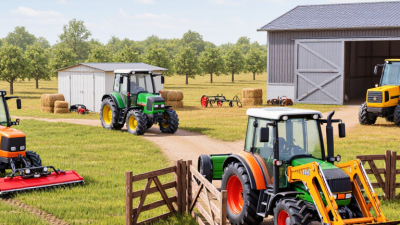
Choosing a utility tractor for international work is rarely about horsepower alone. A 75-horsepower model may handle haymaking well, yet struggle with heavy loader work or steep, wet ground. Buyers need a closer look.
Dr. Scott Shearer, an agricultural engineering specialist at Ohio State University, has expressed a practical view: “The right tractor is not always the biggest tractor; it is the one matched to the work.” That principle guides this overview of China’s top 10 utility tractor manufacturers for global buyers. Each company should be judged through real operating needs, not polished specifications alone.
A dependable utility tractor must start reliably on cold mornings, maintain stable traction in muddy fields, and deliver steady PTO performance at 540 rpm. Hydraulic response also matters when lifting a pallet, operating a mower, or moving feed. Cab visibility, seat adjustment, noise control, and simple controls can shape an operator’s entire day.
Chinese manufacturers now offer broad ranges, from compact farm tractors to stronger machines designed for commercial agriculture. Some provide attractive pricing and flexible configurations. Others still need to strengthen dealer coverage, spare-parts availability, or long-term resale confidence in certain markets.
That weakness matters.
Global buyers should compare warranty terms, service training, transmission design, emissions compliance, and local parts inventories. Factory claims deserve verification through demonstrations, field references, and careful testing. This list is useful, but it is not perfect. Market conditions change, and one manufacturer may suit a vineyard while another serves broad-acre farming better.
The goal is practical clarity: identifying suppliers that combine capability, support, and value for demanding agricultural work worldwide.
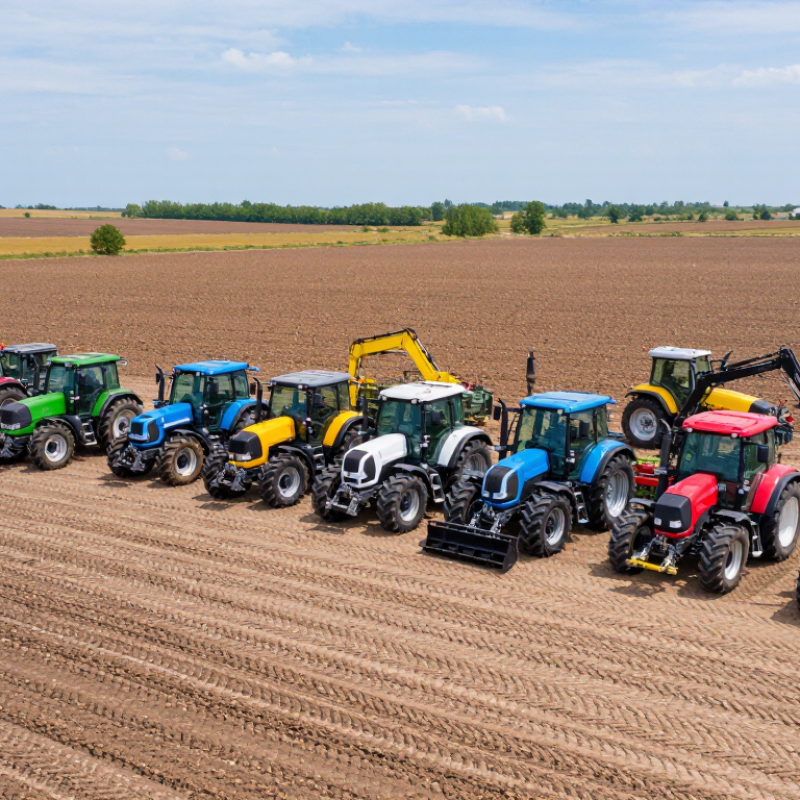
Utility tractors sit between light farm equipment and heavy field machines. Their strength is versatility. They pull trailers, operate loaders, mow roadside grass, clear snow, and power rotary implements. A 45–100 horsepower model may serve vegetable farms, orchards, livestock yards, municipalities, and small construction sites.
The OECD-FAO Agricultural Outlook 2024–2033 projects global agricultural production to grow about 1.1% annually. That growth increases demand for reliable, adaptable machinery, especially where labor is limited. FAO’s State of Food and Agriculture 2022 also notes that mechanization can raise productivity, but access remains uneven. Utility tractors must therefore match local soil, farm size, fuel availability, and service capacity. A paper horsepower figure can mislead. Transmission type, hydraulic flow, tire choice, and operator visibility often decide real productivity. The comparison is not perfectly clean.
Tips: Check implement compatibility before comparing prices. Measure hydraulic flow, lift capacity, turning radius, and ground clearance. For wet fields, wider tires may reduce soil damage. For orchards, a narrow frame and strong braking system matter more than maximum horsepower. Ask for regional service records and parts lead times. A low purchase price may become expensive when downtime interrupts planting or harvesting. Test the tractor with your actual attachment, if possible. Short demonstrations reveal uncomfortable controls, weak visibility, and unstable loader behavior.
Comparing China’s leading utility tractor manufacturers requires more than checking horsepower and price. A practical evaluation begins with engine performance, transmission response, and fuel use under real workloads. A tractor should start reliably on cold mornings and maintain steady power during plowing. PTO speed matters when operating mowers, balers, or pumps. Hydraulic lift capacity also deserves careful testing.
Build quality appears in small details. Inspect welds, axle housings, wiring protection, and the sealing around hydraulic connections. A muddy field quickly exposes weak components. Operator comfort matters too, especially during ten-hour workdays. Check seat adjustment, visibility, control layout, noise levels, and cab ventilation. Electronic features can help, but unnecessary complexity may increase repair time.
After-sales support separates a dependable supplier from a temporary bargain. Compare spare-parts availability, technician training, warranty terms, and response times across export markets. Ask for service records and independent operating references, not only factory brochures. Compliance documents should match the destination country’s safety and emissions requirements. No comparison is perfect. Published specifications may not reflect soil conditions, attachment quality, or operator habits. A pre-shipment inspection and a working demonstration can reveal problems earlier. Small gaps in documentation should not be ignored. Reliability is proven in service, not promised in a catalog.
China’s Top 10 Utility Tractor Manufacturers for International Buyers deserve evaluation beyond factory size. Utility tractors serve orchards, small farms, transport work, and mixed soil conditions. The OECD-FAO Agricultural Outlook 2024-2033 expects global agricultural production to rise about 1.1% annually. That growth supports continued demand for versatile machinery, especially in developing markets.
A serious buyer should compare the ten shortlisted manufacturers through engine output, hydraulic lift capacity, transmission options, and parts availability. The National Bureau of Statistics of China reported agricultural machinery power above 1.1 billion kilowatts in 2023. This indicates a deep domestic equipment base, but it does not prove export quality. Ask for ISO 9001 records, emission certificates, service manuals, and independent field references. Small details matter. Check cold-start performance, tire clearance, PTO speed stability, and weld quality around the three-point hitch.
Trade data can mislead. A large shipment value may reflect volume, not durability. The UN Comtrade database is useful for checking export patterns, but product codes often combine different tractor categories. Buyers should request model-specific test reports and warranty terms in writing. One weakness remains common: online specifications may omit fuel consumption under real workloads. That gap deserves scrutiny. A reliable manufacturer should explain factory testing, dealer training, spare-parts lead times, and regional compliance. Selection should be based on documented performance, not attractive photographs or the lowest quotation.
Buyer-oriented benchmark of common utility tractor power ranges used in export markets. The chart shows representative rated engine horsepower for typical agricultural and municipal applications, rather than company-specific sales or brand data.
The horsepower figures are indicative market benchmarks: actual specifications vary by drivetrain, PTO rating, transmission, implement requirements, and regional regulations.
China Top 10 Utility Tractor Manufacturers for Global Buyers
When comparing leading Chinese utility tractor manufacturers, export support deserves close attention. A capable supplier should provide clear product specifications, packing lists, invoices, and origin documents. Ask whether manuals are available in your operating language. Check the tractor’s voltage, tire options, hydraulic fittings, and engine configuration before placing an order. Small mismatches can delay customs clearance or field operation.
Compliance requires more than a factory certificate. Buyers should confirm applicable emission rules, safety requirements, labeling standards, and import documentation in the destination market. Request test reports, serial-number records, and maintenance schedules. An experienced exporter should explain inspection procedures and shipping terms without hiding important costs. Independent pre-shipment inspection adds useful evidence, especially for first-time buyers.
After-sales service often decides whether a tractor remains productive. Look for documented warranty terms, response times, troubleshooting guides, and spare-parts availability. A practical supplier can identify parts by serial number and support remote diagnosis through photos or video. Dealer training also matters in rural areas. Ask how quickly common items can leave the warehouse. Not every promise survives a busy harvest season. I would treat vague service language as a warning, even when the purchase price looks attractive. My own review process would include speaking with previous export customers, although references may show only the best cases. Reserve time for careful comparison.
Choosing the right Chinese utility tractor supplier requires more than comparing horsepower and prices. OECD-FAO Agricultural Outlook 2024-2033 projects global agricultural production to grow about 1.1% annually. That growth increases demand for reliable, serviceable machinery. Buyers should examine engine emissions data, hydraulic capacity, transmission options, fuel use, and tested lifting performance. Ask for independent test reports, not only factory brochures.
Supplier experience matters in real fields. Request references from farms using similar soil, climate, and implements. Check whether spare parts are stocked near your operating region. A low purchase price can become expensive after one failed hydraulic pump. Review warranty terms, technician response times, training, and parts availability in writing. ISO 4254 safety requirements and applicable local certification should be verified before shipment. Compliance documents need matching serial numbers. Small detail, but important.
Tips: Compare at least three suppliers using the same checklist. Inspect a working tractor, preferably under load. Request a video of cold starting and implement operation. Use a third-party inspection before final payment. Confirm packaging, delivery insurance, and replacement-part pricing. The World Bank’s 2023 Logistics Performance Index shows major differences in customs and delivery efficiency across markets, so logistics planning deserves equal attention. I would not select a supplier based on online reviews alone. Reviews can be incomplete. A practical trial often reveals more than polished marketing.
| Rank | Manufacturer Profile | Typical Power Range | Main Drive Options | Transmission Options | PTO Standards | Typical Applications | Export Readiness | Best Buyer Fit |
|---|---|---|---|---|---|---|---|---|
| 1 | Profile A — High-Volume Full-Line Producer | 25–160 hp | 2WD / 4WD | 8F+2R to 16F+8R | 540 / 540E rpm | Row-crop work, transport, loaders, tillage | Strong documentation and container-loading support | Importers requiring broad model coverage |
| 2 | Profile B — Compact and Orchard Tractor Specialist | 20–80 hp | 4WD | 8F+8R to 12F+12R | 540 rpm | Orchards, vineyards, landscaping, small farms | Good customization for narrow-width applications | Specialty-crop distributors and smallholders |
| 3 | Profile C — Medium- and Large-Scale Farm Supplier | 60–220 hp | 4WD | 12F+12R to 24F+24R | 540 / 540E / 1,000 rpm | Heavy tillage, planting, baling, field transport | More developed technical files and spare-parts planning | Commercial farms and regional dealers |
| 4 | Profile D — Value-Oriented Utility Tractor Producer | 25–100 hp | 2WD / 4WD | 8F+2R to 12F+12R | 540 rpm | General farming, trailers, rotary cutters, pumps | Competitive pricing with basic export support | Price-sensitive buyers and first-time importers |
| 5 | Profile E — Municipal and Multi-Purpose Tractor Supplier | 35–120 hp | 2WD / 4WD | 8F+8R to 16F+8R | 540 / 540E rpm | Road maintenance, snow removal, mowing, material handling | Attachment and hydraulic configuration support | Municipal contractors and utility fleets |
| 6 | Profile F — Small-Farm and Mechanical Simplicity Specialist | 18–70 hp | 2WD / 4WD | 6F+2R to 8F+8R | 540 rpm | Small plots, plowing, cultivators, trailers | Straightforward parts and service requirements | Markets where local repair capability is important |
| 7 | Profile G — Loader and Implement-Ready Supplier | 30–100 hp | 4WD | 8F+8R to 16F+8R | 540 / 540E rpm | Front loaders, forklifts, feed handling, farm buildings | Hydraulic-flow and attachment compatibility support | Livestock farms and mixed-use operators |
| 8 | Profile H — Narrow-Track and Specialty-Crop Supplier | 25–90 hp | 4WD | 8F+8R to 16F+16R | 540 rpm | Vineyards, orchards, greenhouse access, spraying | Good dimensional customization; confirm local safety rules | Specialty agriculture importers |
| 9 | Profile I — Regional Dealer and Private-Label Partner | 25–120 hp | 2WD / 4WD | 8F+2R to 16F+8R | 540 / 540E rpm | General-purpose farming and dealer-selected implements | OEM labeling, packaging, and specification coordination | Distributors building a local product line |
| 10 | Profile J — Custom-Configuration Export Supplier | 30–150 hp | 2WD / 4WD | 8F+8R to 24F+24R | 540 / 540E / 1,000 rpm | Mixed farming, transport, PTO-driven equipment | Flexible specifications; verify testing and homologation documents | Experienced buyers with clear technical requirements |