A small tractor can look convincing on a showroom floor. The real test comes later: turning through a narrow gate, lifting a loaded bucket, or mowing uneven ground without scalping the lawn. In 2026, choosing among small tractors means matching the machine to those everyday jobs, not chasing the largest horsepower figure.
Agricultural engineer Mark Hanna is a useful technical reference when evaluating farm machinery. No source was provided to verify a direct quotation from him, so this guide will not put invented words in his mouth. Its working rule is simple: “Choose for the work you actually do, not the work you might someday imagine.” Treat that as an editorial principle, not a quotation. It points buyers toward practical questions: How much lift capacity is enough? Will the tractor fit through the shed door? Can it run the attachments you need?
Details matter. A loader may save hours moving gravel, yet add weight and cost you do not need. A compact model may fit between orchard rows, but struggle with heavy soil or steep ground. There is no perfect choice for every property. And yes, specifications can mislead. This guide will compare power, transmission, PTO, hydraulics, comfort, dealer support, and ownership costs, then explain how to test a tractor against your land and workload before buying.
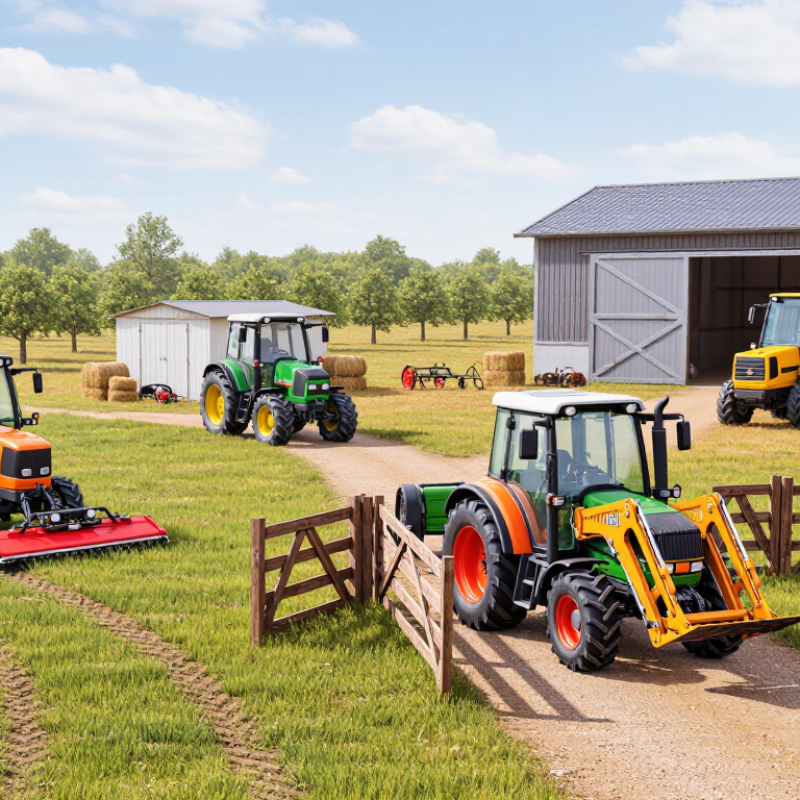
A 20–60 engine-hp compact tractor can suit very different properties, so acreage alone is a weak buying rule. The USDA’s 2022 Census of Agriculture reported an average U.S. farm size of 463 acres, but that figure includes large operations and does not describe the workload on a small acreage. A five-acre property with steep grass, snow, and heavy hauling may demand more than a larger, mostly open field.
Small plots still bite.
List the jobs you will actually do: mowing, loader work, tilling, hauling, or running a rotary cutter. Then match each implement’s power and weight requirements to the tractor’s rated engine and PTO horsepower. These ratings differ. ASABE’s D497 machinery-management data provides a professional basis for evaluating field capacity and operating efficiency; real results still vary with soil, slope, operator, and equipment setup.
A wet clay lane, for example, can limit useful work before horsepower does.
For occasional mowing and light transport, the lower end of the range may be enough. Frequent loader use, larger implements, or rough ground can justify more horsepower, traction, and machine weight. Do not buy by acreage alone; I would measure gates, storage space, and the narrowest turning area too.
That detail is easy to miss.
The right size depends on the hardest regular task, not the biggest number on the property map.
When choosing a small tractor, separate engine power from usable PTO power. SAE J1995 provides a standardized method for measuring engine power, while ISO 789-1 covers tractor PTO power tests. Those figures describe different points in the powertrain; they are not interchangeable. A higher engine rating does not automatically mean more power reaches an implement.
Compare published test reports, not just brochure numbers. Nebraska Tractor Test Laboratory reports record PTO power alongside engine speed, PTO speed, and test conditions. Check that the conditions and units match before comparing models. For mowing or running a rotary tiller, PTO horsepower is the more direct guide; engine power alone can mislead. Small numbers matter.
Look for PTO power at the speed your implement requires, then check whether the tractor sustains it under load. SAE J1995 and ISO 789-1 results can help, but they do not replace checking the exact test configuration. It is tempting to pick the biggest number. I would pause there: tire setup, transmission choice, and operating conditions can affect real work, and a test sheet cannot capture every field. That caveat is easy to overlook.
Choosing a small tractor in 2026 means checking implement fit, not just engine size. A Category 1 three-point hitch needs compatible pins and geometry. Confirm the implement’s listed hitch category before buying. The PTO should provide 540 rpm at the specified engine speed, and the implement’s shaft must connect safely without binding. Small details matter.
Tips: Compare implement weight with the tractor’s rated lift capacity. Check where that capacity is measured; lift ratings at the hitch arms can differ from ratings measured farther behind them. Leave a safety margin.
A mower may lift easily near the hitch but feel heavy when raised at the end of its long frame. That extra leverage can affect steering and stability. Check the tractor manual for lift capacity, ballast guidance, and PTO horsepower—not engine horsepower alone. Match the implement’s power requirement to the PTO rating. I would check the figures twice; brochures can make comparisons confusing. A short test with the implement attached can reveal poor clearance or an awkward turning radius. And verify the PTO guard is present and in good condition. Don’t guess. A well-matched implement should work within the tractor’s limits, not merely connect to it.
For a small tractor, choose drive type by the ground beneath the tires, not by acreage alone. ASABE’s D497.7 machinery-management data gives typical tractive-efficiency ranges of about 68–72% for 2WD and 72–77% for 4WD. These are estimates, not guarantees. Wet clay, slopes, and heavy implements can change the result quickly. Mud changes the answer. On firm, level lawns and light hauling, 2WD may be simpler and less costly. For loader work, uneven ground, or regular snow clearing, 4WD usually provides more dependable traction. Keep the front axle and tires in good condition; worn tires can waste that advantage.
Transmission choice depends on how often speed and direction change. Hydrostatic transmission (HST) makes slow loader cycles and frequent reversals easier, especially around trees or sheds. Gear transmission suits steady pulling, mowing, or longer runs where fixed speeds feel natural. Nebraska Tractor Test Laboratory reports separate PTO and drawbar horsepower, a useful reminder that engine rating alone does not show usable pulling power. Compare test data for similar tractor sizes and tires. Small details matter. HST can feel less efficient under sustained heavy drawbar loads, while gears may demand more clutch work in tight spaces. Be honest about your routine: a technically stronger setup can still be the wrong fit.
Start with the ROPS, or rollover protective structure. Confirm it is designed for the tractor and has no cracks, bent supports, or loose mounting bolts. A seat belt matters, too: it helps keep the operator within the protected area. Check the manual for the correct setup, and inspect the tractor in person when possible. Safety details are easy to overlook.
Next, verify whether the diesel engine meets EPA Tier 4 requirements for its engine class. Ask the seller for the emissions label and engine documentation; don’t rely on a sales description alone. Find out how the exhaust after-treatment system works and what maintenance it requires. Some systems need periodic regeneration, which may interrupt work. Ask how that process fits your typical jobs and operating conditions.
Ownership costs go beyond the purchase price. Estimate fuel, scheduled service, filters, tires, insurance, and storage over several years. Request a written service schedule and price common replacement parts before you buy. If you plan to use attachments, confirm the tractor’s hydraulic capacity and compatibility; an undersized setup can add expense later. I would not treat any estimate as exact. Your workload, terrain, and local service access can change the numbers considerably.
EPA Tier 4 Final particulate matter (PM) standards for nonroad diesel engines, by engine power category.
Before buying: Confirm the tractor has a ROPS (rollover protective structure) and use its seat belt as directed. Check the engine’s emissions label and certification for its power category; these bars show regulatory PM limits, not measured emissions from a particular tractor. Compare total ownership costs—including purchase price, fuel, maintenance, repairs, and storage—using your expected hours of use.