
China Top Compact Tractor Manufacturers for Global Buyers
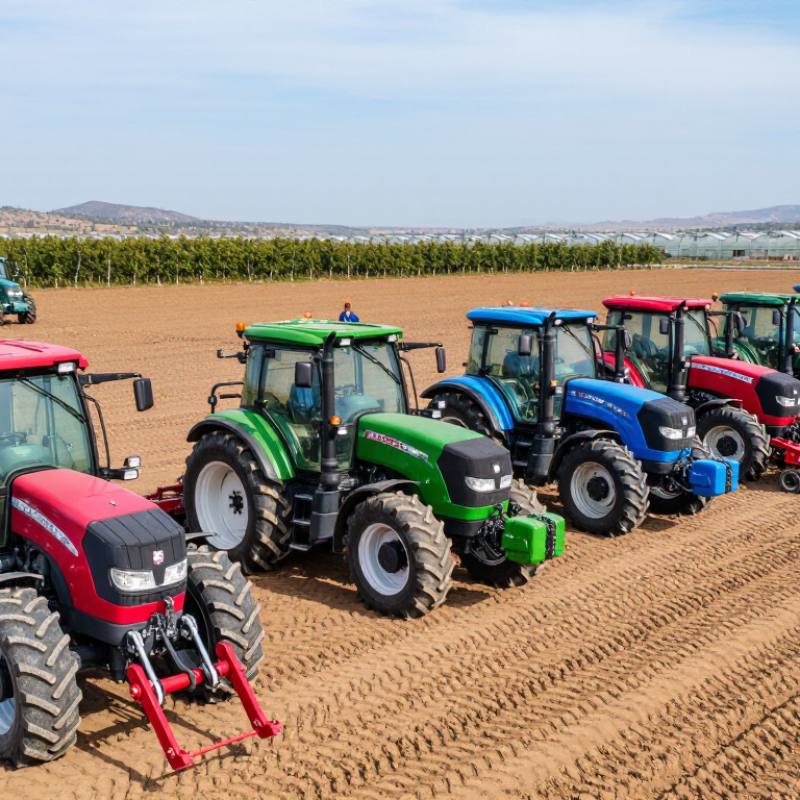
Choosing a compact tractor from China requires more than comparing horsepower and purchase prices. Global buyers need dependable engineering, practical attachments, responsive support, and clear export documentation. A tractor may look impressive in a brochure. Real performance appears in muddy fields, narrow orchards, greenhouse aisles, and long working days.
This guide examines China’s leading compact tractor manufacturers through a buyer-focused lens. It considers engine output, hydraulic capacity, transmission design, four-wheel drive, operator comfort, fuel efficiency, and attachment compatibility. Factory experience matters. So does quality control. A manufacturer with modern assembly equipment may still need stronger after-sales communication in distant markets.
Agricultural machinery specialist Dr. John Fulton emphasizes, “The best machine is the one that fits the task, the operator, and the system.” That principle guides this overview. A 25-horsepower compact tractor may suit vineyard maintenance, while a 50-horsepower model may handle heavier loader work. Bigger is not always better.
Details matter.
We also look at warranty practices, spare-parts availability, dealer networks, training, and international certification readiness. These factors often decide whether ownership feels efficient or frustrating. Buyers should verify every technical claim directly with manufacturers. Some published specifications remain difficult to compare across brands. That weakness deserves attention.
This introduction is not a promise that every listed supplier will suit every market. Conditions vary widely. Soil, climate, operator skill, import procedures, and local service capacity can change the final choice. The strongest compact tractor is not necessarily the cheapest one. It is the machine that delivers consistent work, manageable maintenance, and credible support after delivery.
What Defines a Compact Tractor for Global Buyers
China Top Compact Tractor Manufacturers for Global Buyers
What Defines a Compact Tractor for Global Buyers
A compact tractor is defined by balance, not size alone. It must provide useful power while remaining easy to transport, store, and operate. Many global buyers consider models between 20 and 60 horsepower. Yet horsepower can mislead. A tractor with poor weight distribution may struggle with a loaded trailer or rotary cutter. Four-wheel drive, a reliable three-point hitch, and suitable PTO speeds matter more in daily work.
Working conditions shape the right specification. A vineyard may require a narrow chassis and precise steering. Small farms often need strong hydraulic flow for loaders and attachments. In wet regions, tire choice and ground clearance become critical. In colder areas, starting performance and battery protection deserve close inspection. Operators should also examine the seat, control layout, braking system, and rollover protection. Comfort is not a luxury during eight-hour workdays.
Quality checks should include welds, hose routing, oil leaks, transmission response, and attachment compatibility. Ask for service intervals, parts availability, operator manuals, and verified test records. Export documentation and local safety requirements must also be reviewed before purchase. A lower price is not always lower ownership cost. I have seen buyers focus on engine output while overlooking dealer training and replacement filters. That mistake can stop work for weeks. The compact tractor category is useful, but its limits remain real. Some advertised lifting figures also need careful interpretation under actual load conditions.
China Top Compact Tractor Manufacturers for Global Buyers - What Defines a Compact Tractor for Global Buyers
A practical comparison framework for evaluating compact tractor manufacturers, specifications, export readiness, and application suitability without relying on company or brand names.
| Evaluation Dimension | Typical Compact Tractor Data | Why It Matters to Global Buyers | Recommended Verification |
|---|---|---|---|
| Engine Power | Approximately 15–60 horsepower, with many compact models concentrated between 20 and 50 horsepower. | Power determines the tractor’s ability to operate rotary mowers, loaders, tillers, trailers, snow blowers, and other implements. | Request the engine rated power, maximum power, rated speed, torque data, and applicable test standard. |
| Engine Type | Usually a liquid-cooled diesel engine with three or four cylinders; naturally aspirated and turbocharged options are available. | Diesel engines generally provide strong low-speed torque and are well suited to agricultural and utility work. | Check displacement, cylinder configuration, cooling system, fuel-injection system, emission certification, and service parts availability. |
| Transmission | Manual, synchronized shuttle, hydrostatic, and power-shuttle transmissions are common options. | Hydrostatic transmissions are convenient for loader and landscaping work, while mechanical systems may offer efficient field operation and easier servicing. | Confirm forward and reverse speeds, gear ranges, clutch design, shuttle operation, and transmission warranty coverage. |
| Drive Configuration | Two-wheel drive and selectable four-wheel drive; four-wheel drive is widely preferred for loader work, slopes, and wet ground. | Drive configuration affects traction, stability, tire wear, fuel consumption, and performance in different soil conditions. | Review axle capacity, front-axle construction, differential lock, turning radius, and four-wheel-drive engagement method. |
| Three-Point Hitch | Commonly Category I on smaller models; Category I or Category II may be offered on higher-power compact tractors. | The hitch determines implement compatibility, lifting performance, and the range of agricultural tools that can be used. | Verify hitch category, lift capacity at the ball ends, lift capacity at a defined distance, and hydraulic flow data. |
| PTO System | Rear PTO speeds commonly include 540 rpm; independent, live, and ground-speed PTO configurations may be available. | Correct PTO speed and engagement control are essential for safe and effective operation of mowers, tillers, sprayers, and pumps. | Confirm PTO speed, rated engine speed, independent control, hydraulic or mechanical engagement, and implement compatibility. |
| Hydraulic System | Open-center hydraulic systems are common, with auxiliary flow often configured for loaders and basic hydraulic implements. | Hydraulic flow and pressure influence loader cycle time, steering response, and the operation of hydraulic attachments. | Request pump flow, maximum pressure, number of rear remotes, power-beyond availability, and loader valve specifications. |
| Operating Weight | Roughly 800–2,500 kg, depending on engine power, ballast, cab or rollover protection, tires, and attachments. | Weight affects traction, transport requirements, soil compaction, stability, and lifting performance. | Ask for the operating weight in a clearly defined configuration, including or excluding ballast, loader, cab, and fluids. |
| Overall Dimensions | Compact models are generally designed for narrow access, with width often around 1.0–1.6 m depending on tires and equipment. | Dimensions determine whether the tractor can pass through gates, work between rows, enter greenhouses, and be transported economically. | Confirm overall length, width, height, wheelbase, minimum ground clearance, turning radius, and folded or removed equipment dimensions. |
| Ground Clearance | Often approximately 200–400 mm, with high-clearance versions available for orchard, vineyard, and specialty applications. | Clearance influences performance over uneven terrain and reduces the risk of crop or underbody damage. | Check the measurement point, axle clearance, lowest underbody point, tire size, and clearance with mounted implements. |
| Operator Protection | ROPS-equipped open stations are common; enclosed cabs may provide weather protection, heating, ventilation, or air conditioning. | The operator station affects safety, comfort, productivity, and suitability for hot, cold, dusty, or rainy working environments. | Confirm rollover protection certification, seat-belt arrangement, lighting, mirrors, noise levels, and cab safety documentation. |
| Tire Options | Agricultural, industrial, and turf tread patterns are commonly available in front and rear configurations. | Tire selection affects traction, turf protection, road behavior, stability, and performance on mud, grass, gravel, or paved surfaces. | Review tire sizes, load ratings, rim dimensions, recommended inflation pressure, and replacement-tire availability in the destination market. |
| Primary Applications | Small farms, orchards, vineyards, landscaping, municipal maintenance, equestrian facilities, snow removal, and property management. | A clearly defined application helps buyers select the correct power class, wheelbase, hydraulics, lift capacity, and attachment package. | Match the tractor to actual implement requirements rather than selecting solely by horsepower or purchase price. |
| Emission Compliance | Requirements vary by destination and engine power category; buyers may encounter regional rules such as EU Stage V or U.S. EPA standards. | Non-compliant engines can create customs, registration, resale, and operating restrictions in the destination country. | Obtain the engine emission certificate, type-approval documents, test reports, labeling requirements, and current local regulations. |
| Electrical System | 12-volt electrical systems are common, with alternator capacity varying by model and equipment package. | Electrical capacity supports lighting, instrument panels, work lamps, GPS equipment, heaters, and other accessories. | Confirm battery rating, alternator output, starter specifications, connector standards, fuse protection, and wiring diagrams. |
| Safety and Certification | Important documentation may include machinery conformity records, ROPS/FOPS evidence, operator manuals, and electrical safety information. | Complete compliance documentation supports import clearance, local registration, insurance, and safer operation. | Request applicable conformity declarations, independent test reports, serial-number traceability, warning labels, and translated manuals. |
| Parts and After-Sales Support | Core requirements include a parts catalogue, service manual, warranty policy, technical support, and a defined spare-parts process. | Reliable support reduces downtime and total ownership cost, especially when the buyer is far from the manufacturing location. | Evaluate parts lead times, dealer or distributor coverage, warranty exclusions, troubleshooting support, and service-training resources. |
| Export and Logistics Readiness | Export packages may include reinforced crating, corrosion protection, multilingual documentation, and container-loading plans. | Proper preparation reduces transit damage, unexpected freight costs, customs delays, and assembly problems after arrival. | Confirm Incoterms, packing dimensions, gross weight, loading photographs, export documents, spare-parts packing, and inspection procedures. |
| Total Cost of Ownership | Purchase price is only one element; fuel, maintenance, tires, attachments, financing, transport, taxes, and downtime also contribute. | A lower initial price may not result in lower operating cost if parts, fuel efficiency, service access, or resale value are weak. | Compare a complete ownership estimate over several operating years using local fuel, labor, parts, tax, and transport costs. |
Buyer note: Specifications can vary by configuration, engine option, destination market, and applicable regulations. Always verify the final technical data, certification documents, and attachment compatibility for the exact export model.
Related Posts
-
Top 10 Tips for Buying a Micro Tractor Online?
-
China Best Micro Tractor Options for Efficient Farming Solutions?
-
Why Choose a Mid Size Tractor for Your Farming Needs?
-
Why Skid Loaders Are Essential for Efficient Construction and Landscaping Projects
-

Exploring Unique Applications of Round Balers in Modern Agriculture
-

Maximizing Efficiency with Utility Tractors for Modern Agricultural Practices