How to Choose the Right Skid Loader for Your Construction Needs
Choosing the right skid loader for your construction needs is crucial for enhancing productivity and efficiency on job sites. According to a recent report by the Association of Equipment Manufacturers (AEM), the skid loader market is expected to grow significantly, with projections indicating a compound annual growth rate (CAGR) of 6% over the next five years. This growth is fueled by the increasing demand for versatile and compact machinery in various construction applications, from landscaping to heavy-duty excavation.
Industry expert John Smith, a renowned skid loader consultant, emphasizes the importance of selecting the appropriate machine for specific tasks: “Understanding the unique capabilities of different skid loaders can make all the difference in project outcomes." With various models available, each offering distinct features such as lift capacity, operating weight, and attachment compatibility, it is imperative for construction managers and operators to assess their requirements carefully. By doing so, they can ensure that their investment leads to improved operational efficiency and reduced downtime on the job site. In the following sections, we will explore key considerations for choosing the right skid loader tailored to your construction needs.

Understanding the Different Types of Skid Loaders Available
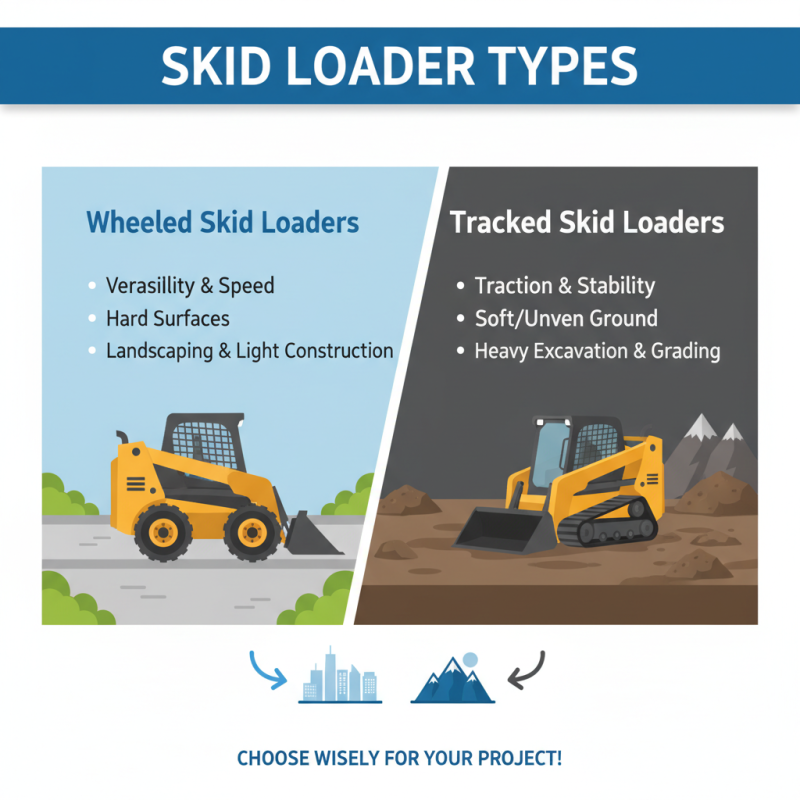
When considering the right skid loader for your construction needs, it's essential to understand the various types available in the market. Skid loaders can generally be categorized into two types: wheeled and tracked. Wheeled skid loaders are favored for their versatility and speed, making them ideal for projects that require mobility across hard surfaces. Their ability to quickly maneuver around construction sites or tight spaces makes them a popular choice for landscaping, maintenance, and light construction tasks.
On the other hand, tracked skid loaders offer enhanced stability and traction, particularly in muddy or uneven terrain. They distribute their weight more effectively, reducing ground pressure and minimizing damage to delicate surfaces. This makes them particularly suited for heavy-duty work in agriculture, forestry, or any operations requiring heavy lifting and stable footing. Additionally, the choice between radial lift and vertical lift designs adds another layer of specificity, as radial lift is advantageous for digging and grading, while vertical lift excels at reaching higher loading heights. Understanding these distinctions is crucial in selecting the skid loader that perfectly aligns with your project requirements.
Assessing Your Project Requirements and Site Conditions
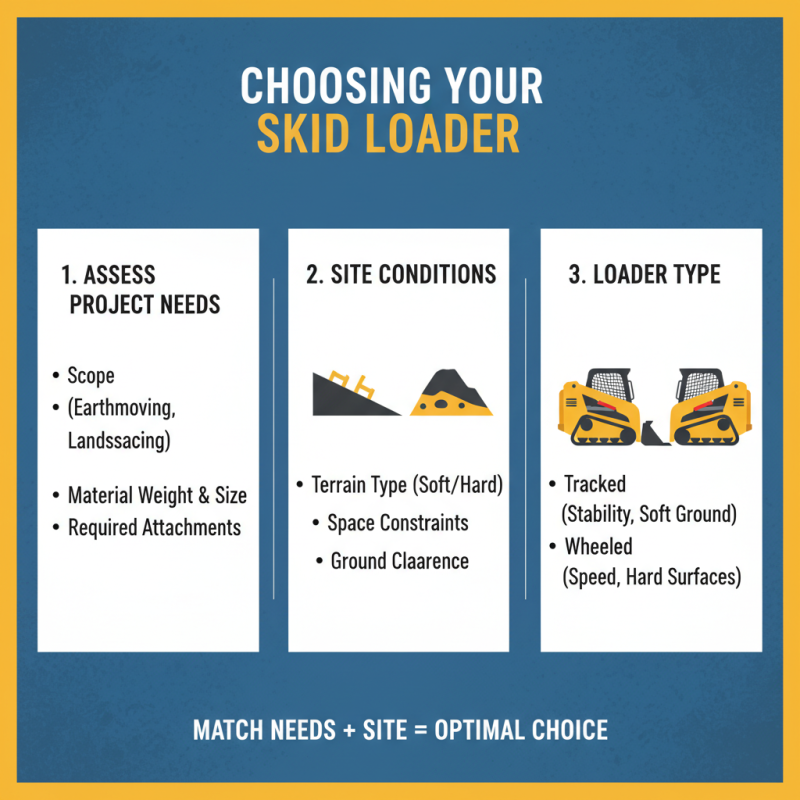
When choosing the right skid loader for your construction needs, it's essential to first assess your project requirements and site conditions. Understanding the scope of your project—whether it's large-scale earthmoving, landscaping, or material handling—will significantly influence the type of skid loader you need. Evaluate the weight and size of materials you'll be working with, as well as any specific attachments required for your tasks.
Tips: Consider the lifting capacity of the skid loader. If your projects frequently involve heavy loads, opt for a model with a higher capacity to ensure efficiency and safety. Additionally, think about the maneuverability required on your job site. Smaller skid loaders are ideal for confined spaces, while larger models can handle more robust tasks on broader terrains.
Furthermore, assess the terrain of your worksite. If you are working on uneven ground or soft soil, a skid loader with four-wheel drive and appropriate tires will enhance stability and performance. Take note of any environmental factors, such as steep inclines or muddy conditions, and choose a skid loader equipped to handle those challenges efficiently.
Tips: Before making a decision, test drive a few models on similar surfaces to determine how they perform. This hands-on experience can provide invaluable insights into what best fits your construction needs.
Evaluating Engine Power and Load Capacity for Optimal Performance
When selecting a skid loader for construction, evaluating engine power and load capacity is crucial for achieving optimal performance. Engine power primarily determines the machine's efficiency and ability to handle various tasks. A loader with adequate horsepower ensures that it can perform effectively under heavy loads and difficult conditions, such as rough terrains or steep inclines. It's essential to consider the type of attachments you plan to use, as different tasks may require varying levels of power. A powerful engine not only enhances productivity but also contributes to the overall reliability of the skid loader, reducing the likelihood of breakdowns during operations.
Load capacity is equally important when choosing a skid loader, as it dictates the maximum weight the machine can safely carry or lift. Assessing your specific construction needs will help you determine the appropriate load capacity required for your projects. It's advisable to consider the average loads you'll be transporting and any future projects that may demand higher capacity. A machine that falls short of these requirements can lead to decreased performance, increased wear and tear, and potential safety hazards. Therefore, understanding both engine power and load capacity in relation to your construction tasks will ensure that you select a skid loader that maximizes efficiency and performance on the job site.
How to Choose the Right Skid Loader for Your Construction Needs - Evaluating Engine Power and Load Capacity for Optimal Performance
| Model |
Engine Power (HP) |
Operating Load Capacity (lbs) |
Tip Capacity (lbs) |
Height to Hinge Pin (in) |
| Skid Loader A |
60 |
1,500 |
3,000 |
82 |
| Skid Loader B |
75 |
2,000 |
4,200 |
88 |
| Skid Loader C |
85 |
2,500 |
5,000 |
92 |
| Skid Loader D |
100 |
3,000 |
6,200 |
96 |
| Skid Loader E |
110 |
3,500 |
7,000 |
100 |
Considering Attachments and Versatility for Diverse Tasks
When selecting the right skid loader for construction projects, one of the most critical considerations is the range of attachments and their versatility. According to the American Rental Association, the demand for versatile equipment has surged, with 68% of contractors emphasizing the importance of multi-functional machinery that can adapt to varied tasks without the need for additional investments in separate tools. Skid loaders stand out in this aspect, offering a plethora of attachments that transform them from simple earth movers to powerful tools capable of handling tasks such as grading, hauling, and even demolition.
In a recent industry report by the Equipment Dealers Association, it was highlighted that the attachment market for skid loaders is expected to grow at a compound annual growth rate (CAGR) of over 5% through 2026. This growth is driven by advancements in attachment technology, allowing for improved efficiency and productivity on job sites. For instance, hydraulic quick couplers enable operators to switch attachments swiftly, minimizing downtime and enhancing workflow. As construction projects increasingly demand specialized functions within tight timelines, the ability to seamlessly adapt a skid loader for multiple uses becomes invaluable in maximizing return on investment.
Budgeting and Financing Options for Your Skid Loader Purchase
When considering the purchase of a skid loader for your construction needs, budgeting and financing options play a crucial role in the decision-making process. Establishing a comprehensive budget is essential to avoid overspending while ensuring you acquire the right equipment. Begin by analyzing the total costs associated with owning a skid loader, which include the purchase price, maintenance expenses, insurance, and operational costs like fuel and labor. This thorough assessment will help you determine a realistic budget that aligns with your financial capabilities and project requirements.
Once you have a clear budget in mind, explore various financing options available for acquiring a skid loader. Traditional financing methods, such as bank loans, can offer competitive interest rates, while lease-to-own agreements may provide more flexibility in cash flow management. Additionally, consider financing through specialized equipment lenders who may have tailored options that suit your specific needs. Investigating grants and government assistance programs can also serve as potential financial resources, particularly for companies involved in construction projects that promote economic development. By carefully evaluating these financing avenues, you can make an informed decision that ensures the successful addition of a skid loader to your construction operations.
Skid Loader Purchase Budgeting and Financing Options