Breaking Capacity Of Rcd What You Need To Know
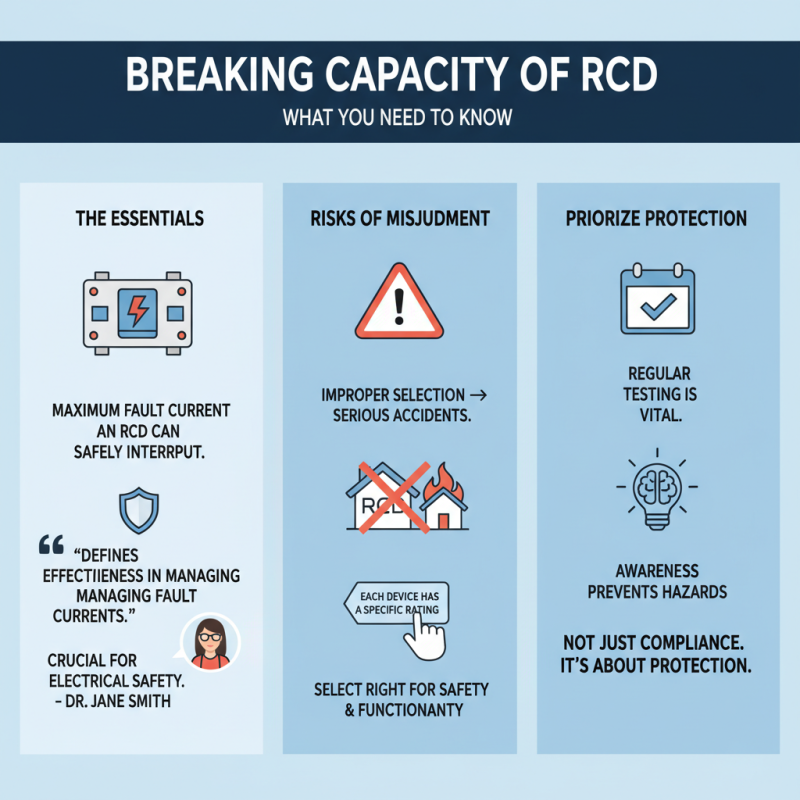
In the realm of electrical safety, understanding the "Breaking Capacity Of Rcd" is crucial. Dr. Jane Smith, a leading expert in electrical engineering, once stated, "The breaking capacity defines how effectively an RCD can manage fault currents." This highlights the importance of understanding this concept for both professionals and homeowners.
The breaking capacity indicates the maximum current a residual current device (RCD) can interrupt safely. Misjudgment in selecting an RCD can lead to serious accidents. Each device is rated for a specific breaking capacity. Choosing the right one ensures both safety and functionality in your electrical installations.
Many individuals overlook the significance of this parameter. RCDs need to be tested regularly to confirm their effectiveness. Awareness of the breaking capacity can prevent potential hazards. It's not just about compliance; it's about protection. Therefore, understanding the Breaking Capacity Of Rcd should be a priority for everyone who values safety in their electrical systems.
Breaking Capacity Defined: Understanding RCD Specifications and Standards
Understanding the breaking capacity of Residual Current Devices (RCDs) is crucial for safety. It refers to the maximum fault current an RCD can interrupt without failing. This specification is vital in electrical installations. It ensures the device can handle potential overloads without posing any risk. Not all RCDs have the same breaking capacity, and knowing these differences is essential for making informed choices.
When selecting an RCD, one must consider its ratings. Manufacturers often provide details on current and voltage levels. A common specification includes a breaking capacity of 6kA or 10kA. Be aware that higher ratings typically indicate a more robust device. However, it also means that the system may require additional components. The environment where the RCD is to be installed can influence its performance. Factors like humidity and temperature should not be overlooked.
Seeking out professional advice can help in choosing the right device. It may seem straightforward, but nuances exist. Not every situation is the same. Testing and compliance with local standards are fundamental. Understanding these aspects can safeguard your electrical systems. A mismatch between RCD specifications and actual use can lead to failures. Being informed minimizes potential risks and ensures reliability.
Importance of Breaking Capacity in RCD Performance and Safety
The breaking capacity of Residual Current Devices (RCDs) is crucial for ensuring safety in electrical installations. This capacity indicates how much current an RCD can interrupt without failing. A higher breaking capacity means better protection against faults. Consequently, choosing the right RCD with adequate breaking capacity can prevent potential electrical hazards, such as shocks and fires.
Understanding this concept is vital for professionals and homeowners alike. If an RCD has an insufficient breaking capacity, it may not operate effectively during an overload. This inefficiency can lead to dangerous situations. Awareness of the operational environment also plays a part. Do not overlook factors like the type of electrical load or potential fault conditions. These can affect the performance of your RCD.
Regular testing and maintenance of RCDs are just as important as selecting the right model. Take note of any signs of wear or failure. These minor issues may seem trivial, but neglecting them might lead to greater risks. By prioritizing RCD performance and understanding breaking capacity, safety outcomes can be significantly improved in any electrical system.
Factors Influencing the Breaking Capacity of Residual Current Devices
The breaking capacity of Residual Current Devices (RCDs) is a critical factor in electrical safety. It refers to the maximum fault current the device can safely interrupt without damage. A higher breaking capacity means the RCD can handle larger fault currents, which is essential for protecting both people and property.
Several factors influence the breaking capacity of RCDs. The design and materials used in construction play significant roles. For instance, RCDs with superior insulating materials can withstand higher voltages, enhancing their reliability. According to the International Electrotechnical Commission (IEC), typical breaking capacities for domestic RCDs range from 6 kA to 30 kA. However, environmental conditions also matter. High temperatures or humidity can degrade performance over time, impacting the RCD’s effectiveness.
Practical considerations must be addressed as well. Electrical load types connected to the RCD are crucial. Inductive loads, like motors, create inrush currents that could exceed normal limits. Additionally, installation practices can greatly affect performance. Improper wiring may lead to unexpected failures. Ensuring that RCDs are correctly rated for specific applications enhances safety. Regular testing and maintenance should not be overlooked to ensure these devices function as intended over their lifespan.
Breaking Capacity Of RCD: Factors Influencing the Breaking Capacity
This chart illustrates the breaking capacity in kA of different types of Residual Current Devices (RCDs). The data indicates the varying capacity levels which are crucial for RCD selection based on application requirements.
Industry Standards: IEC 61008 and IEC 61009 on RCD Breaking Capacity
Choosing the right Residual Current Device (RCD) is crucial for electrical safety. The breaking capacity of an RCD determines its ability to interrupt fault currents. Understanding the industry standards, such as IEC 61008 and IEC 61009, is essential for proper selection and installation. These standards define how RCDs should perform under fault conditions.
RCDs are rated based on their breaking capacity. IEC 61008 covers RCDs for specific applications, while IEC 61009 focuses on miniature circuit breakers combined with RCDs. Knowing the difference helps you choose the right device for your system. Many users overlook these specifications, which could lead to inadequate protection.
Tips: Always verify the rating of your RCD against the expected fault currents in your installation. Regular testing can prevent failures. Over time, devices may not function as expected. Make a point to check your RCDs biannually for reliability. Little maintenance can make a significant difference in safety.
Real-World Applications: Assessing RCDs in Various Electrical Installations
Residual Current Devices (RCDs) are essential in electrical safety. They protect us from electric shocks and reduce the risk of electrical fires. In residential settings, these devices are commonly installed in kitchens and bathrooms, where wet conditions increase the danger of electric shock. The proper assessment of RCDs in these areas is crucial to ensure they function effectively.
In commercial and industrial installations, RCDs must meet specific requirements. For example, workshops with heavy machinery require frequent testing and monitoring of RCDs. This can be challenging, as the conditions may change rapidly due to equipment use. A failure to assess these devices appropriately can lead to severe safety hazards.
Regular inspections and maintenance help identify any issues before they become critical.
Not all installations are straightforward. Some users might underappreciate the importance of RCDs in less obvious locations, like outdoor settings. If not carefully considered, this oversight can lead to tragic incidents. Making informed choices about RCDs and their applications reflects a commitment to electrical safety.
Balancing cost with safety is a constant challenge requiring ongoing reflection and adaptation.
