What is the Best Compact Tractor for Your Farming Needs?
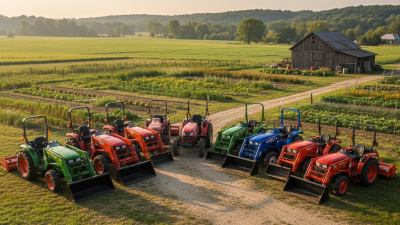
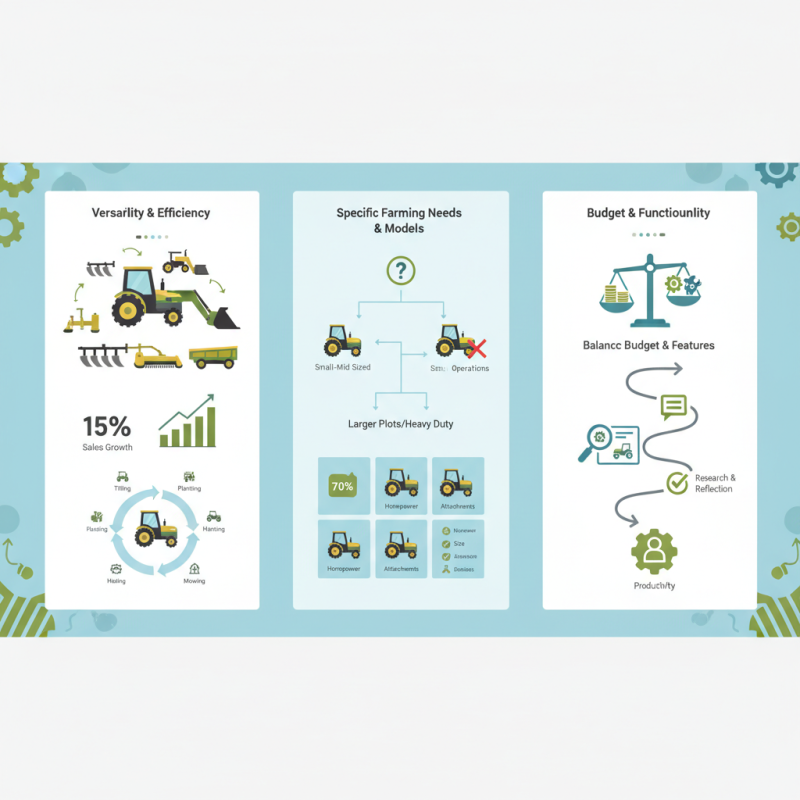
In the realm of modern agriculture, the compact tractor has become an essential tool for many farmers. According to a report by the Association of Equipment Manufacturers, compact tractors have seen a 15% increase in sales over the past three years. This growth highlights the farmer's demand for versatility and efficiency in their farming operations. These tractors can perform a variety of tasks, from tilling and planting to hauling and mowing, making them a valuable asset.
Choosing the right compact tractor requires careful consideration of specific farming needs. Different models offer various horsepower, size, and attachments. A farmer’s unique requirements may dictate the best choice. A comprehensive review of industry standards shows that over 70% of farmers seek compact tractors for small to mid-sized operations. However, not every compact tractor will be suitable for all tasks. Some higher horsepower options may not be efficient for smaller plots of land, leading to potential wasted resources.
Farmers often grapple with the challenge of balancing budget constraints and functionality when selecting a compact tractor. Investing in the wrong model might lead to inefficiencies and increased costs. Therefore, understanding the various features and capabilities of compact tractors is crucial. While compact tractors promise efficiency, selecting the best fit involves reflection and thorough research. Taking the time to examine all options ensures better decision-making and ultimately leads to a more productive farming operation.
Factors to Consider When Choosing a Compact Tractor
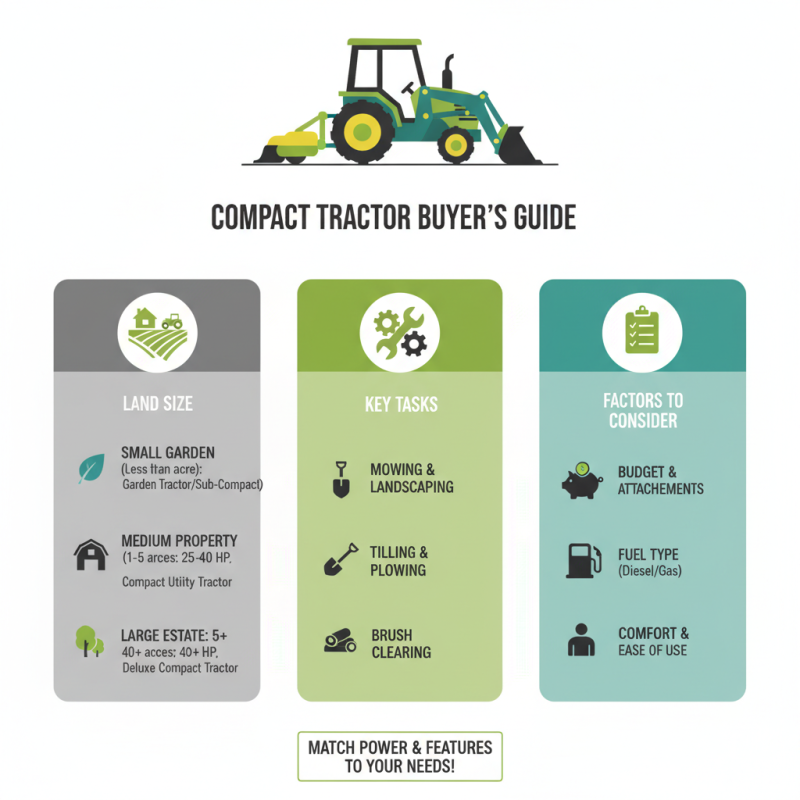
Choosing the right compact tractor for your needs can be challenging. You must consider several factors. Think about the size of your land. Compact tractors vary in power and capabilities, making it crucial to match these features to your specific requirements. Larger properties might require more horsepower, while small gardens need less.
Evaluate the tasks you'll perform. Will you be plowing, mowing, or hauling? Different tasks need different attachments. Attachments can greatly increase versatility. However, selecting too many might lead to inefficiency. Analyze your work habits. Do you prefer a simple design or advanced features? Simplicity can lead to fewer breakdowns but might lack some modern conveniences.
Budget is another critical aspect. Compact tractors can range widely in price. Setting a clear budget helps narrow your options. Remember to factor in maintenance costs as well. Owning a more expensive model isn't always better if upkeep is outrageous. Think about resale value too, should you wish to upgrade later. Reflect on these points carefully before deciding.
Top Compact Tractor Brands in the Market
When exploring compact tractors, it's crucial to understand the top brands in the market. Recent industry reports indicate a growing demand for these machines. In 2022, compact tractors accounted for over 25% of total agricultural equipment sales in North America. This trend is driven by small-scale farmers who seek efficiency in their operations.
Several brands dominate this segment. They offer models with varying horsepower, from 20 to 60 HP, catering to diverse farming tasks. Key features include ease of use and versatility. Many machines come with attachments for mowing, tilling, and hauling. Some reports suggest that compact tractors can complete tasks 30% faster than larger models in tight spaces. However, potential buyers should assess their specific needs carefully.
It's essential to consider customer reviews and expert opinions. Occasionally, users report issues with service and parts availability. Prospective buyers should investigate warranty options as well. Some brands may offer limited support. This gap in service can hinder performance when issues arise. Ultimately, choosing the right compact tractor involves balancing brand reputation with personal farming needs.
What is the Best Compact Tractor for Your Farming Needs?
| Model |
Horsepower |
Weight (lbs) |
Lift Capacity (lbs) |
Price ($) |
| Model A |
25 |
1500 |
1000 |
15,000 |
| Model B |
30 |
1700 |
1200 |
18,000 |
| Model C |
35 |
1800 |
1500 |
20,500 |
| Model D |
40 |
2000 |
1800 |
22,000 |
| Model E |
45 |
2300 |
2000 |
25,000 |
Comparative Features of Popular Compact Tractor Models
Choosing the best compact tractor requires a closer look at various models and their features. The engine power often varies from 20 to 50 horsepower. This range determines what tasks the tractor can handle on your farm. Some models offer more lifting capacity, which is crucial for heavy-duty jobs. Others emphasize fuel efficiency and ease of use, making them great for smaller properties.
When browsing through compact tractors, note the transmission types. Hydrostatic transmissions provide smooth operation, while gear-driven options may offer better durability. The differences in wheel size can also affect traction and stability in various terrains. A tractor with wider tires ensures better grip on soft ground, which is useful in muddy conditions.
In many reviews, buyers mention the importance of features like a quick-attach loader. This feature simplifies switching attachments, saving time and effort. However, some tractors lack adequate seating comfort, which can lead to fatigue during long hours. Knowing these pros and cons can help you reflect on what your farming needs truly are.
Maintenance and Operating Costs of Compact Tractors
When considering compact tractors, maintenance and operating costs are crucial factors. Regular servicing helps extend the lifespan of the equipment. Data suggests that average annual maintenance can range from $500 to $1,200. This cost includes oil changes, filter replacements, and wear and tear parts. Farmers must budget for these expenses to avoid unexpected financial strain.
Operating costs also play a significant role. Fuel efficiency is essential for compact tractors. On average, a tractor can consume around 2-4 gallons of diesel per hour, depending on usage. This translates to a yearly expenditure of approximately $1,200 to $3,000, based on estimated hours of operation. Understanding fuel consumption habits can help farmers make better choices.
**Tip:** Regularly check your tire pressure. Properly inflated tires can improve fuel efficiency. A 10% reduction in tire pressure may lead to a 15% increase in fuel consumption.
Another consideration is the cost of attachments and accessories. These can add significant expenses to ownership. On average, attachments can range from $500 to $8,000. Farmers should evaluate their specific needs and prioritize essential tools. Sometimes, a cheaper attachment may not be worth the savings if it leads to inefficiency. Being mindful about these factors can make a difference in managing your farming budget.
Real User Experiences: Reviews and Recommendations
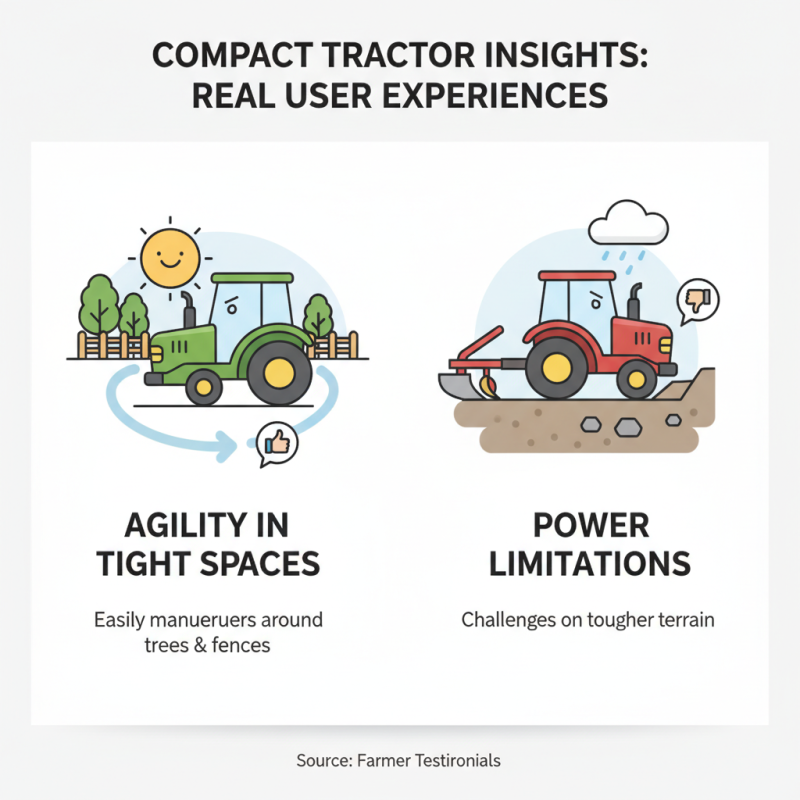
When it comes to compact tractors, real user experiences often provide the most honest insights. Many farmers appreciate how these machines can maneuver in tight spaces. For instance, a user recounted how a compact tractor helped them plant crops in a small field. They mentioned that the tractor’s size made it easy to navigate around trees and fences. However, some users have faced challenges with power limitations when tackling tougher terrain.
Another user highlighted the importance of attachments. They found that using a front loader made a significant difference in their daily tasks. The compact tractor became more versatile with the right tools. Yet, they pointed out that not all attachments work seamlessly with every model. It’s crucial to do thorough research before purchasing. Additionally, some users felt that the comfort of the operator seat could be improved. Long hours in the field can become exhausting without proper support.
Many shared that ongoing maintenance is vital for optimal performance. Regular checks and servicing can prevent larger issues. However, some farmers regretted neglecting this aspect in the past. This led to costly repairs and downtime. Overall, a compact tractor can be a valuable asset, but user experiences show that careful selection and maintenance are key.